
The Wood Devils of Coos County: A Legend With Almost No Evidence
Northern New Hampshire's thin grey figures that hide by standing sideways behind trees. The description is oddly specific — the record behind it is almost nothing, and that's the interesting part.
Updated August 3, 2026
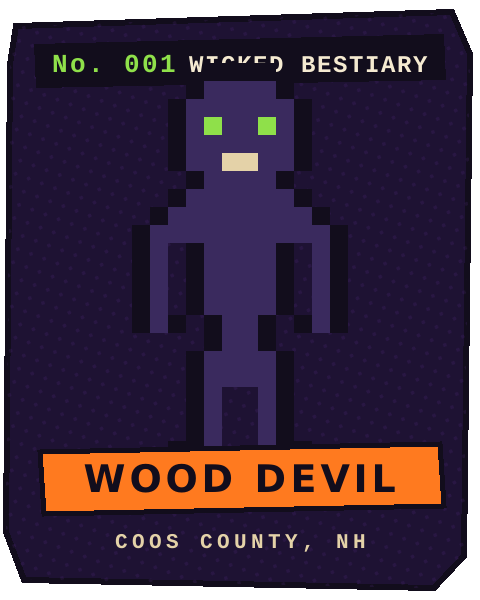
Most cryptids are variations on a theme. Big, hairy, bipedal, seen at distance, photographed badly. The Wood Devil is not that, and the way it differs is specific enough to be worth examining.
It is described as thin. Seven feet or so, ash-grey, and so narrow it can conceal itself behind a tree trunk by turning sideways.
That's a strange thing to invent, because it is the opposite of what the surrounding culture was inventing at the time.
What the legend says
Accounts place the Wood Devils in Coos County, the northernmost part of New Hampshire — the Great North Woods, above the White Mountains, running up to the Quebec line. The area around Jefferson comes up most often. The reports are generally dated to the 1930s. Coös sits just north of Franconia Notch, where Betty and Barney Hill's 1961 drive home became the template for every alien-abduction account since — northern New Hampshire's strangeness has range.
The consistent features: extreme height, extreme thinness, grey or ashen skin, remarkable speed, and near-total avoidance of being seen. The sideways-behind-a-tree detail is the one that persists across every telling, and it's the one that makes the thing feel observed rather than designed. Nobody inventing a monster in the 1930s reaches for narrow.
What the record actually shows
Here is the part most Wood Devil pages skip.
We could not verify a primary source. No substantial contemporaneous newspaper coverage. No named witnesses whose accounts can be followed back. No physical evidence of any kind. The legend circulates almost entirely through twentieth-century cryptid compilations, which cite each other, and through websites that cite the compilations.
That does not make it invented. Plenty of genuine regional folklore never made a newspaper — it lived in kitchens and logging camps and got written down only when somebody came asking, decades late. Coos County in the 1930s was logging country with a French-Canadian and Yankee population who had no particular reason to call the Coös County Democrat about something they saw in the woods.
But it does mean this: anyone telling you the Wood Devils were "widely reported in the 1930s" is describing a record that we could not find. The honest version is that there is a persistent north-country story with an unusually specific description and almost nothing underneath it.
Why it might have stuck anyway
Coos County is the emptiest place in New England. It is enormous, heavily wooded, thinly populated, and dark in a way that people from southern New England do not expect. The logging economy put men into it alone, for long periods, in poor light.
Two mundane candidates fit the description better than most cryptid explanations fit theirs.
A moose in poor light, seen partially through trees, is tall, grey-brown, and has legs that read as impossibly thin when the body is obscured. Moose are also fast, silent when they want to be, and terrifying at close range.
A dead standing tree — a grey barkless snag — is exactly a tall, thin, ash-coloured vertical figure that appears to step behind other trees as you move past it. Parallax does the rest. This is a genuinely common experience in dense forest, and it is unnerving every time.
Neither explains a story that survived a century. Both explain a first sighting, and stories only need one.
The other thing about Coos County
The county's actual strangeness isn't cryptozoological. It's that a place this large and this empty exists three hours from Boston, and that it was busier a hundred years ago than it is now — logging towns that shrank, farms that reverted, rail lines lifted.
That's the same emptiness behind New Hampshire's ghost towns, and it's the real subject underneath most north-country folklore: not a creature in the woods, but the number of people who used to be there and aren't.
If you're heading north, our sibling site HikerNerd covers the trails and conditions up there, and the haunted hikes of the White Mountains covers the range immediately south.
The Haunted Almanac
We check all 50 New England haunted attractions against their own websites, every week. 25 have published 2026 dates so far. Last sweep: September 15.
The ones that matter never announce. Spooky World published twenty-three nights and put them nowhere but its ticket widget; Scary Acres rebuilt its whole site in nine days without a word. We find those and send them to you. Free, and one click gets you out.